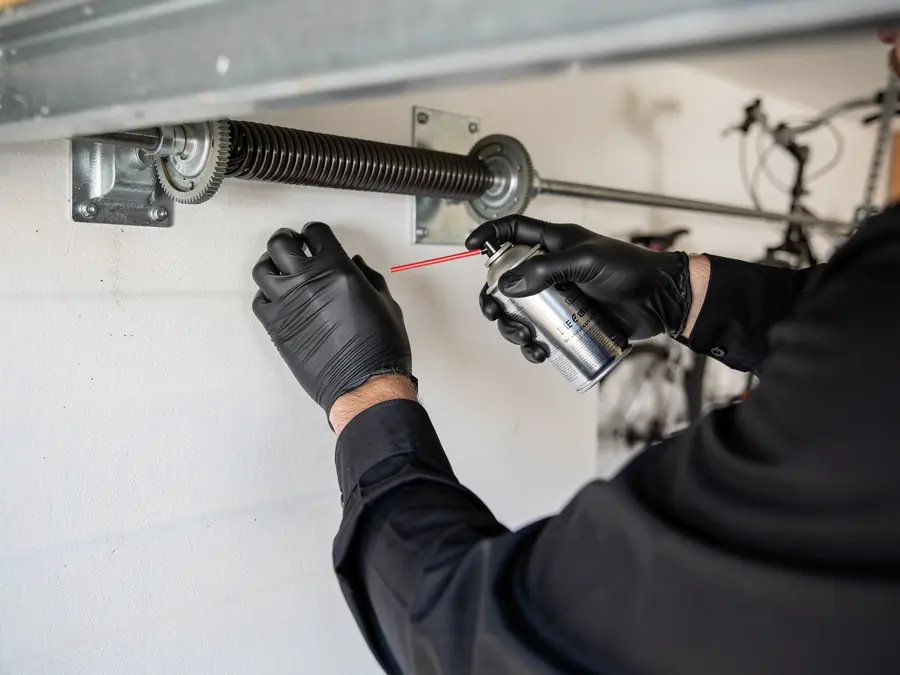
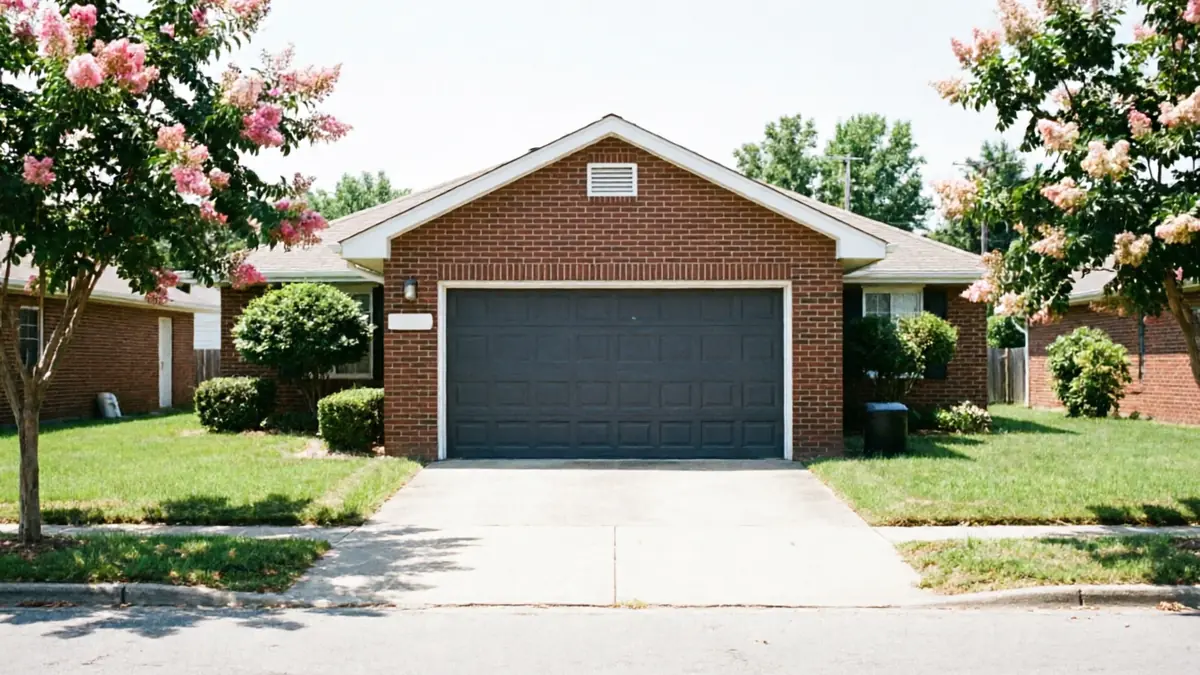
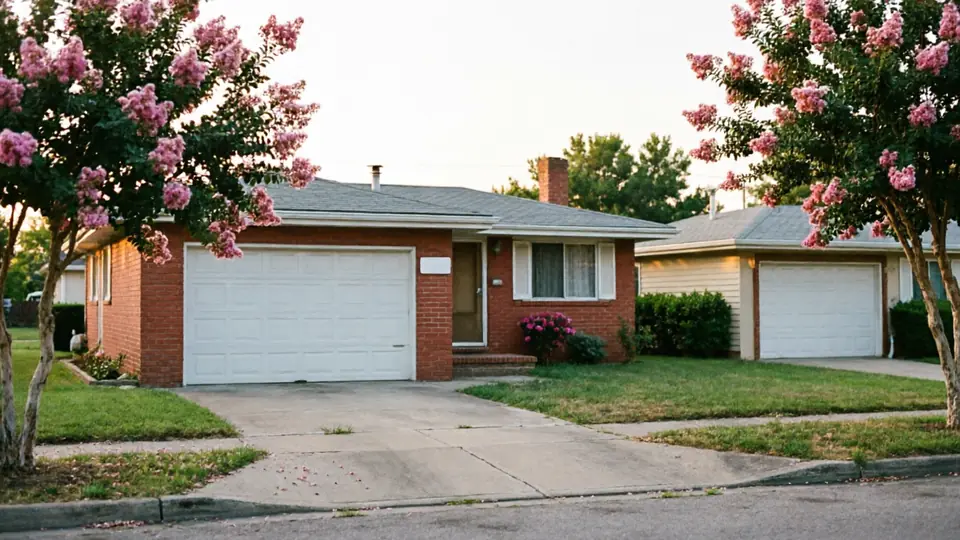
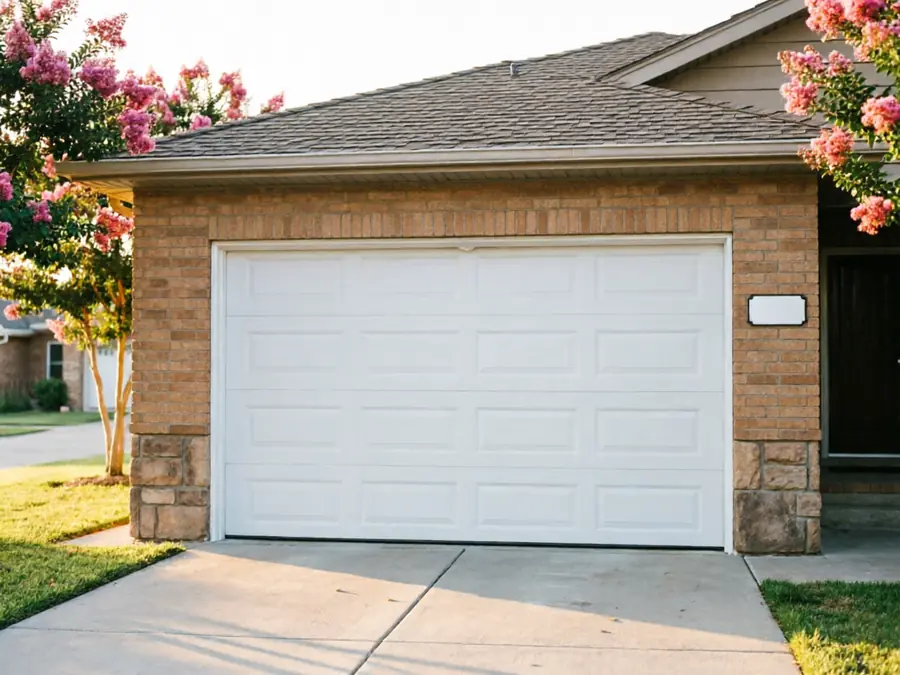
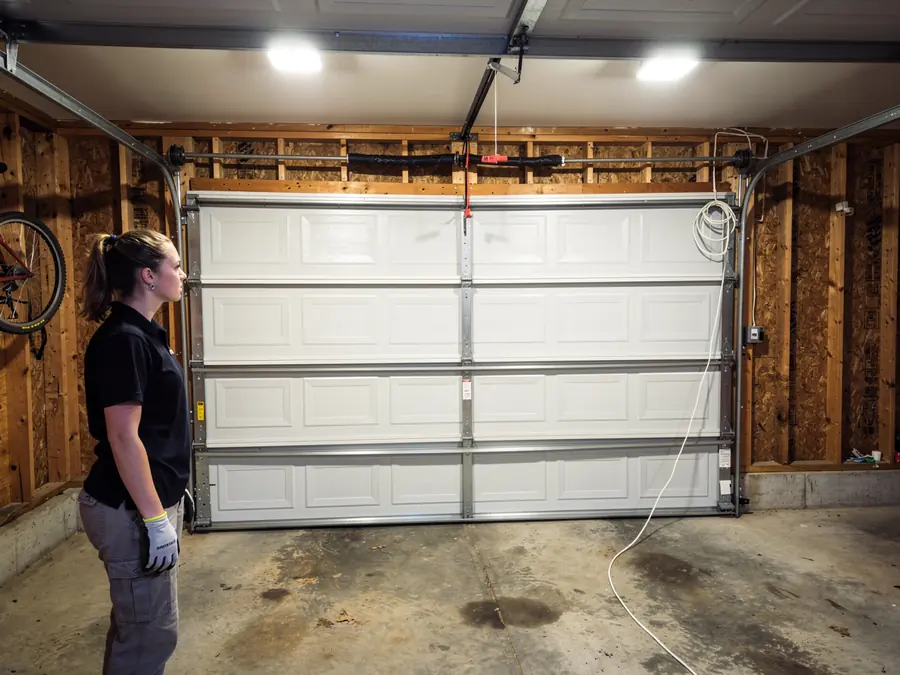
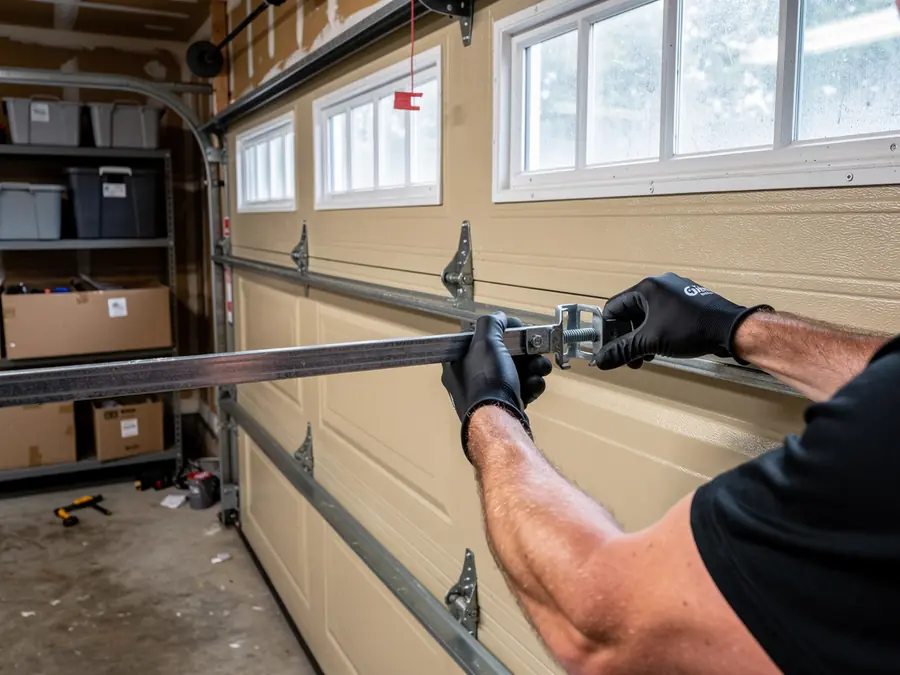
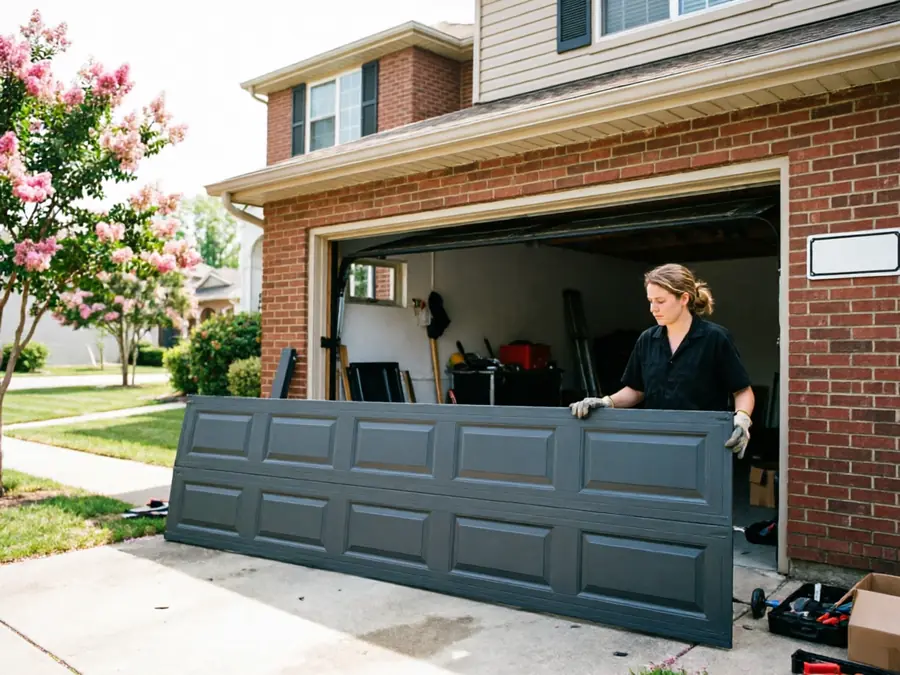
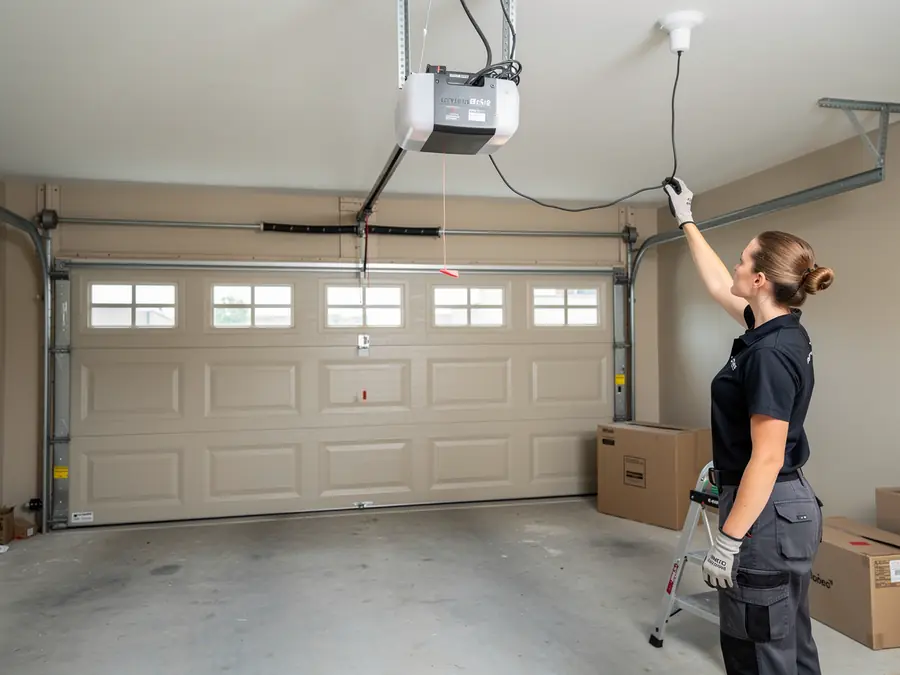
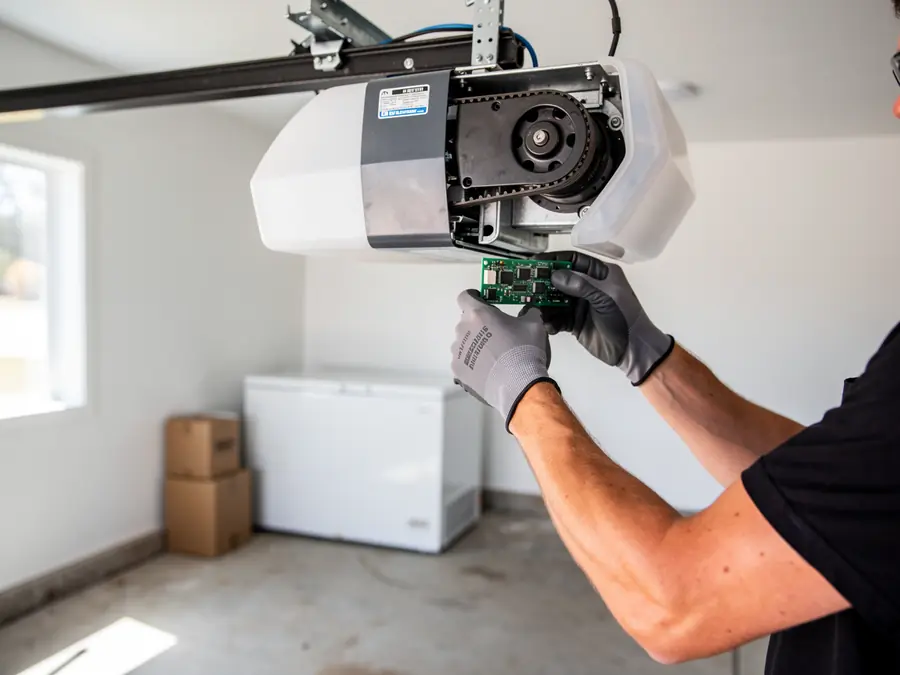
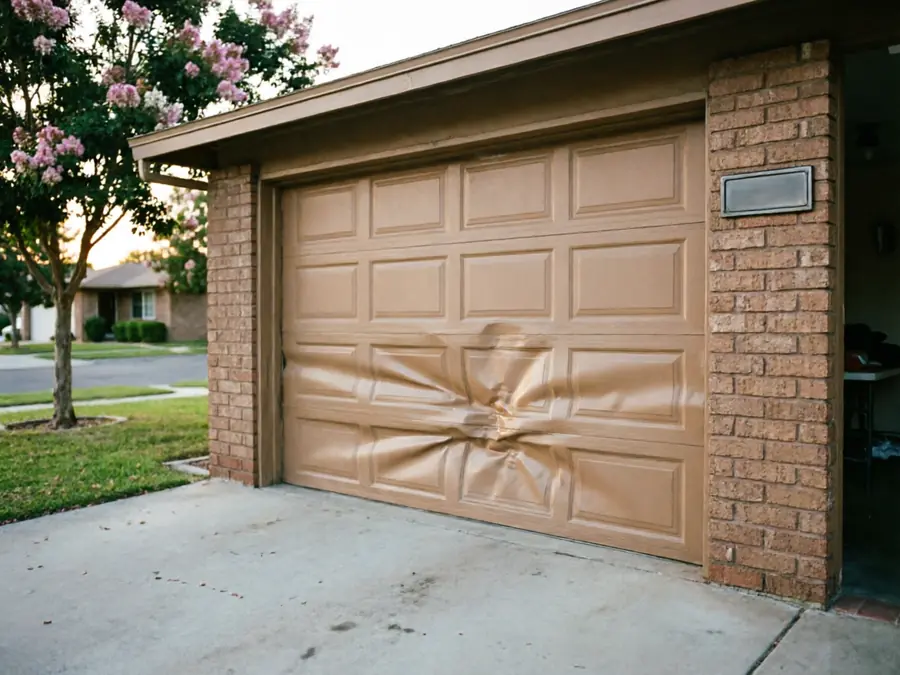
On a door from this era, the failure pattern is predictable. The torsion spring, now three-plus decades old on many of these houses, loses tension gradually, so the door gets harder to lift by hand well before it snaps outright - owners usually notice the opener straining before the spring actually breaks. Steel panels from 1989 construction don't have the foam-core insulation that later doors use, so dents from a bumped car show as a visible crease rather than a shallow dimple, and a cracked bottom seal lets water and debris track into the garage. Nylon rollers from an earlier repair wear out and start rattling in the track, especially on doors that get used twice a day. Openers from a mid-life replacement, likely chain-drive units, tend to lose the logic board or the drive gear before the motor itself quits.