Dead logic board
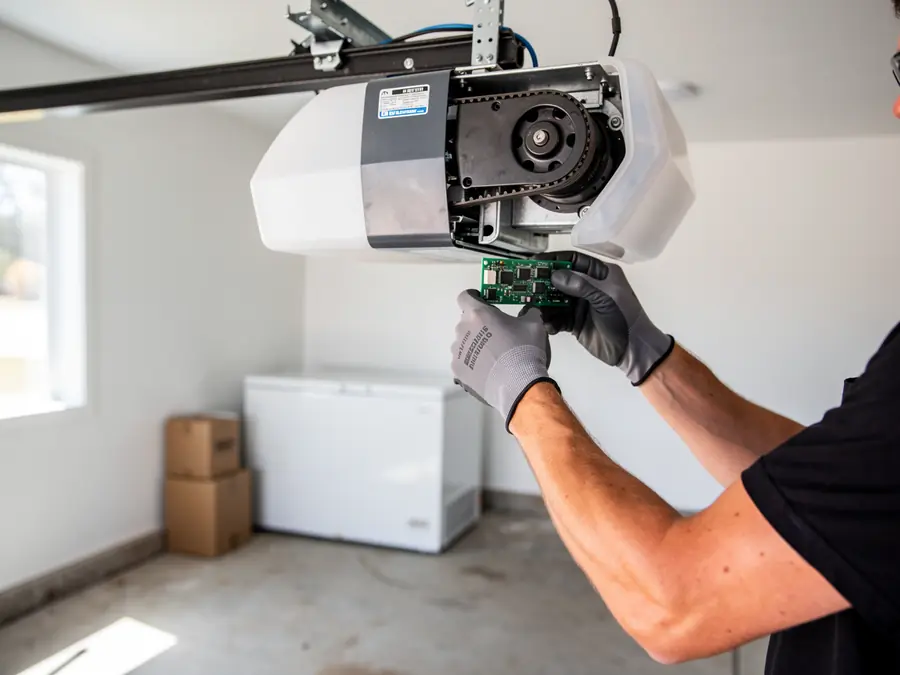
On older chain-drive units from the original 1980s-90s builds, you'll also see the logic board failing outright: no lights, no hum, nothing when you hit the remote or the wall button. Intermittent failures are their own category.
Brandon, FL
Opener repair for Brandon homes built in the 1980s and 90s, from dead safety sensors to stripped gears on units that have run through two decades of Florida humidity.
Local causes
Most of the housing stock in this part of the county went up between 1979 and 2013, with a median build year around 1991. That means a big share of the openers out there are original or first-replacement units that have been running for twenty to forty years. Chain and belt drive motors from that era use plastic drive gears, capacitors, and circuit boards that weren't built for a service life this long, and they're reaching the end of it now, all around the same time, because the houses went up in waves.
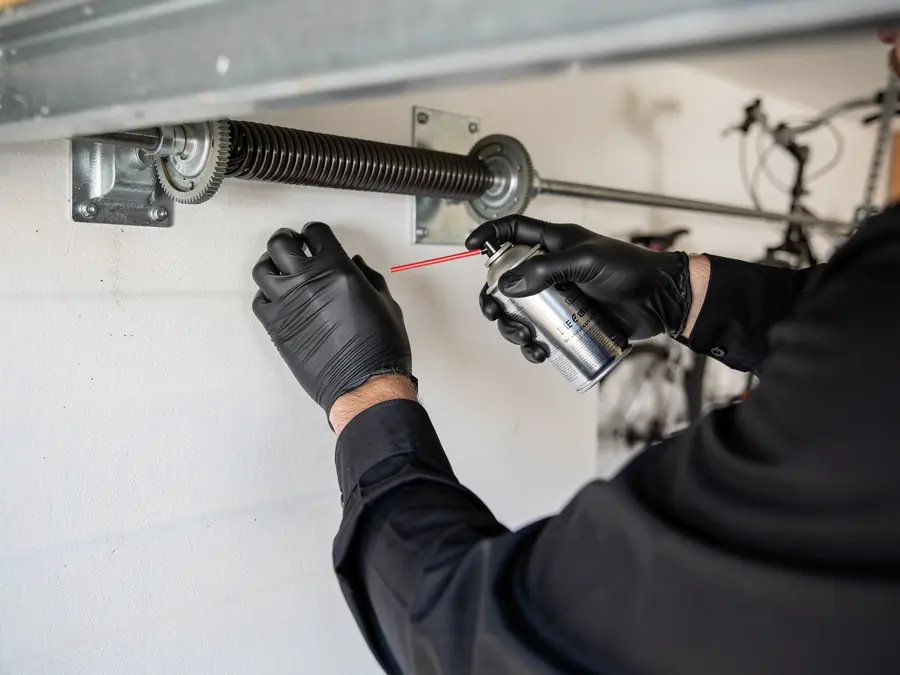
The climate here is mild temperate, not the wet-dry extreme you'd get further inland or further south, but Florida humidity still works on exposed electronics and lubricated moving parts year-round. Logic boards corrode slowly at the contact points. Grease on the drive rail gums up with dust and goes stiff. None of this is dramatic weather damage - it's just time and moisture doing what they do to a garage, which is usually the least climate-controlled room in the house.
Across the service area there are 235,673 households and 97,772 owner-occupied houses, a lot of them built in that same 1980s-90s window. That volume of similar-aged equipment is why opener repair calls cluster the way they do - it's not bad luck, it's the housing stock aging together.
Warning signs
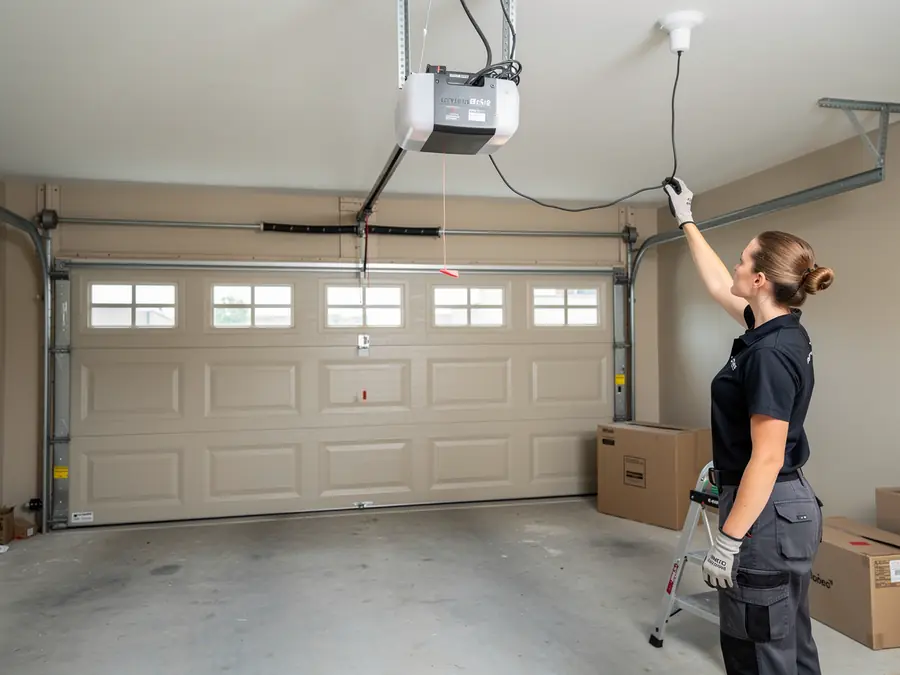
The most common call is an opener that runs the motor but the door doesn't move, or moves and reverses partway up - usually a stripped nylon gear inside the housing, a worn-out drive belt, or a safety sensor that's drifted out of alignment.
On older chain-drive units from the original 1980s-90s builds, you'll also see the logic board failing outright: no lights, no hum, nothing when you hit the remote or the wall button. Intermittent failures are their own category.
A door that works fine some days and not others, or responds to the wall switch but not the remote, usually points to a weakening capacitor or a receiver board going bad - not something you can diagnose by looking at it from across the garage.
Homeowners sometimes describe it as the opener being 'temperamental,' which is a decent way to put it, but it's a component failing gradually rather than a one-time glitch. We also see sensor misalignment causing doors to refuse to close at all, which isn't usually an opener failure - it's a bracket that's loosened or shifted enough to throw the beam off. Worth ruling out before assuming the motor unit itself is bad.
Pricing
We don't publish a flat number here because opener repair costs depend on what's actually failed - a sensor realignment is a different job than a logic board or a full gear and sprocket kit, and the age of the unit affects whether parts are even still being made for it.
What we can tell you is that for openers original to houses built in that 1979-2013 window, parts availability starts to become the real cost driver, not labor.
Median household income across the service area runs around $71,012, and most of the repair work we do fits comfortably within what a homeowner at that income level budgets for routine house maintenance - this isn't typically a financing decision the way a full door replacement can be.
That said, if your opener is old enough that the manufacturer has stopped making boards for it, repair stops being the cheaper option and we'll tell you that instead of chasing parts that don't exist anymore.
Watch-outs
The repair that goes wrong most often is one where somebody replaces the opener logic board or gear kit without checking the springs and cables first.
An opener motor is only rated to lift a door that's properly counterbalanced - if the torsion spring is weak or the cables are stretched, the new opener strains against dead weight and fails again within months, and it looks like a bad repair when it's actually a different problem entirely. The other place this goes sideways is sensor wiring.
On houses from the original 1980s-90s builds, opener wiring sometimes runs through conduit or behind drywall in ways that make a clean sensor swap more involved than it looks, and a rushed fix can leave a safety sensor technically working but not actually reliable. We'd rather take the extra twenty minutes to route it right than leave a sensor that fails intermittently six months later.
One honest limit: if an opener is old enough that we can't source a matching logic board or compatible gear kit, we're not going to improvise a part that doesn't fit the mounting or voltage spec. At that point replacement is the straight answer, even though it's a bigger job than a repair call.
Questions
Usually a misaligned safety sensor, which is common on older brackets that have loosened over the years. It can also mean the close-force setting is too sensitive for a door whose springs have weakened with age. We check both before replacing any parts.
Depends on what failed. A sensor or capacitor swap is usually worth it. If the logic board is dead and the manufacturer no longer makes a matching replacement, repair isn't realistic and we'll say so rather than hunt for a part that doesn't exist.
Not dramatically, but steadily. Our climate here is mild rather than extreme, but year-round moisture still corrodes circuit board contacts and stiffens drive-rail lubricant over time, which is part of why openers from the 1980s and 90s building boom are failing now.
Explore more
Ready when you are
Brandon Garage Door Pros repairs and installs garage doors, springs and openers in Brandon, FL and the surrounding area.