Five common opener parts
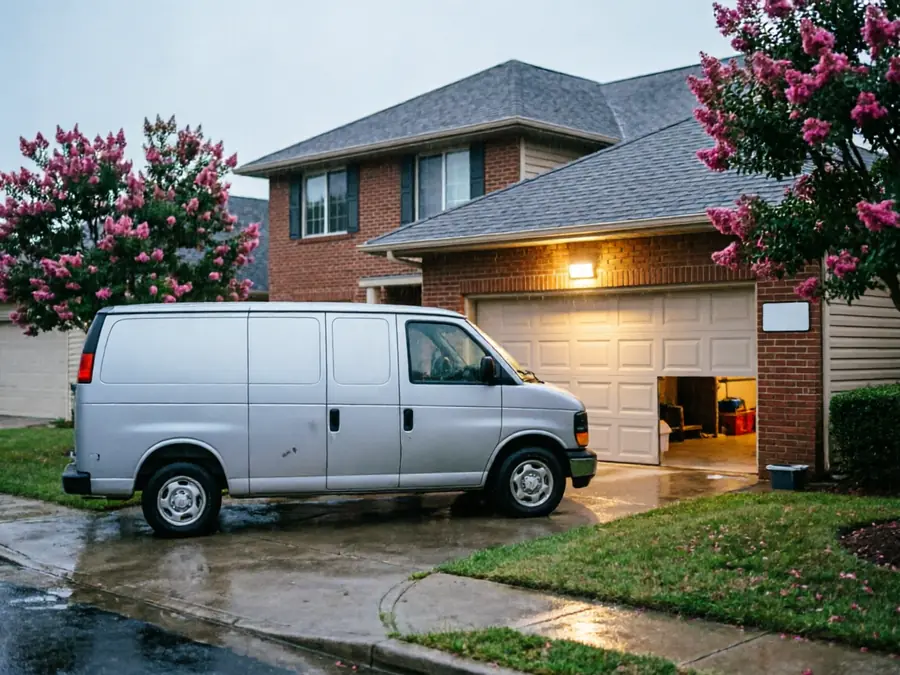
We carry logic boards, limit switch assemblies, drive gear kits, chain and belt sets, and replacement safety sensors on the truck, because those are the five calls we get most out this way.
Seffner, Brandon
Opener repair for Seffner, FL, where most garage doors date to the late 1980s. We bring the gear kits, belts, and boards those openers actually need, five miles from Brandon.
On the truck
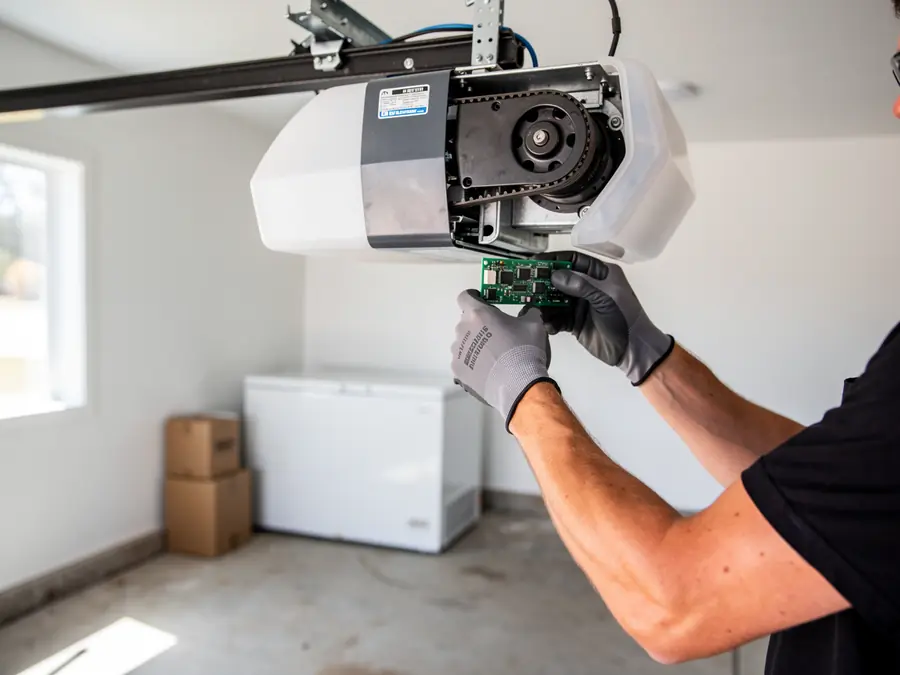
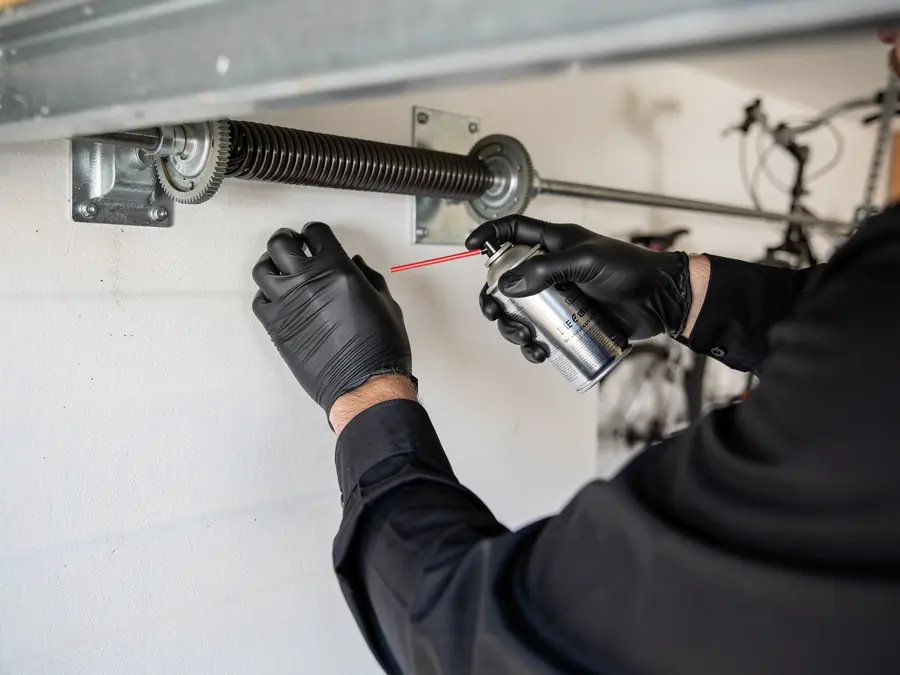
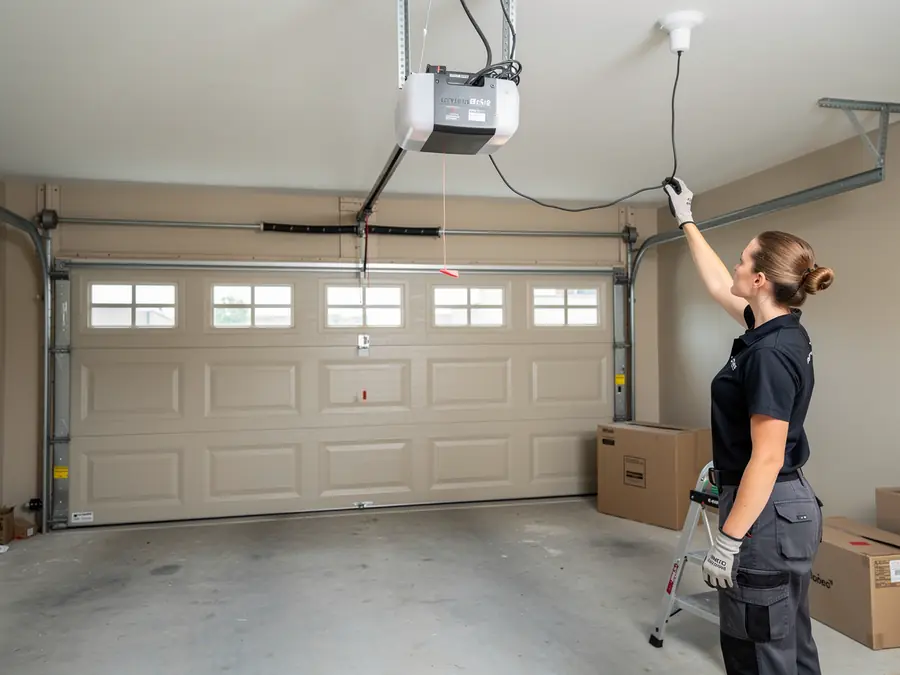
A lot of what we replace on Seffner openers is the stuff that wears out quietly: drive gears worn down to plastic shavings, belts that have stretched and started skipping teeth, circuit boards with a relay that's finally given out after thirty-some years of cycling.
We carry logic boards, limit switch assemblies, drive gear kits, chain and belt sets, and replacement safety sensors on the truck, because those are the five calls we get most out this way.
What we don't carry is every obsolete gear kit for every builder-grade unit sold in 1989 - some of those housings were discontinued by the manufacturer years ago, and if the motor housing itself has cracked or the carriage is the wrong profile for anything made today, we'll tell you that on the spot instead of trying to force a part that won't hold.
In that case replacing the whole unit is usually cheaper than chasing parts for one that isn't made anymore, and we'll say so rather than bill you for the attempt. Most jobs are a gear kit, a sensor pair, or a board swap, done in one visit with what's already on the truck. For door panels, springs, and track work alongside an opener job, see our main page: /seffner/garage-door-service/.
Warning signs
The opener that's been running since the house was built in 1989 doesn't usually die all at once. It starts reversing halfway up for no reason, or the door creeps instead of snapping shut, or the remote works from the driveway but not from the street.
Sometimes it's a grinding sound right before the gear strips out completely and the door won't move at all, chain still turning, carriage going nowhere. Other households have already swapped the opener once - maybe in the 2000s - and what's failing now is that second unit, usually a cheaper chain-drive replacement that's had fifteen or twenty years of use in Florida humidity.
The failure pattern on those looks different: capacitor issues, a board that won't hold a program, a safety sensor that's drifted out of alignment and throws false reversals every time the sun hits it at a certain angle in the afternoon.
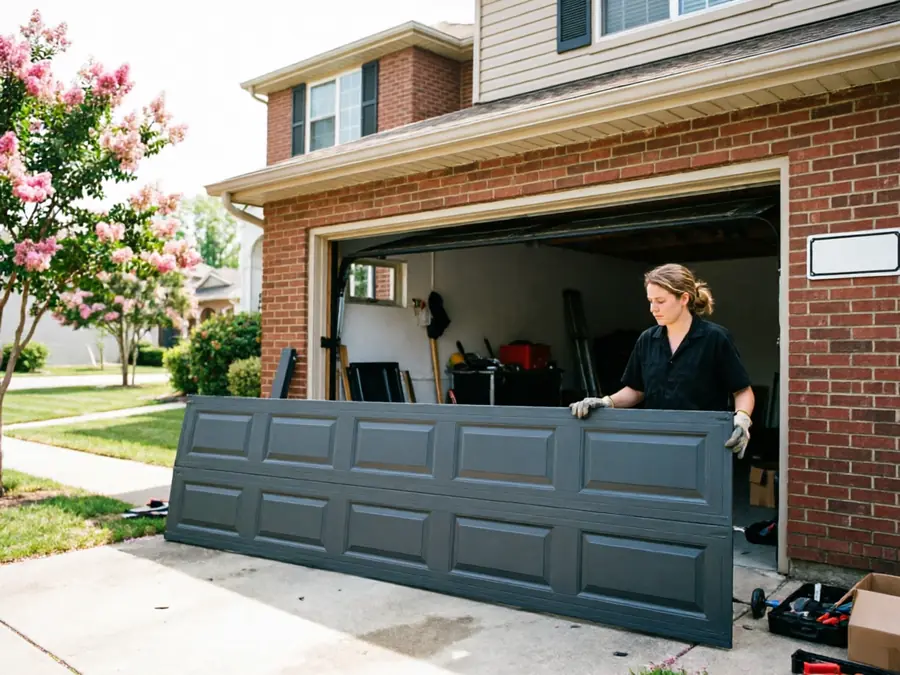
Either way, the door itself is usually fine. It's the motor, the logic board, or the sensors doing the complaining, and that's a different repair than a cable or spring job even though from the driveway it looks the same - a door that won't close.
Local causes
Seffner's housing mostly went up around 1989, which means a big share of garage door openers out here are either the original unit from construction or the first replacement installed sometime in the following decades. Either way, you're dealing with hardware that's had three decades of Florida's mild but humid temperate climate working on it - not brutal cold that cracks housings, but steady heat and moisture that dries out lubricant, swells belts, and corrodes contact points inside control boards faster than a drier climate would.
With roughly 2,796 households in Seffner, a lot of them bought from the same handful of builders in the same few years, which means a lot of the same opener models are aging out at close to the same time. We see it in clusters - not because anything's wrong with the house, just because the hardware has the same birthday.
At a median household income of $88,167, we also see more homeowners here choosing to replace an aging opener outright with a quieter, belt-drive unit rather than keep nursing a thirty-year-old chain-drive motor along with whatever parts are still available for it.
DIY or pro
Reprogramming a remote or replacing a worn weatherseal on the bottom of the door is reasonable to do yourself, and we won't pretend otherwise. Most opener manuals walk you through remote pairing in under a minute.
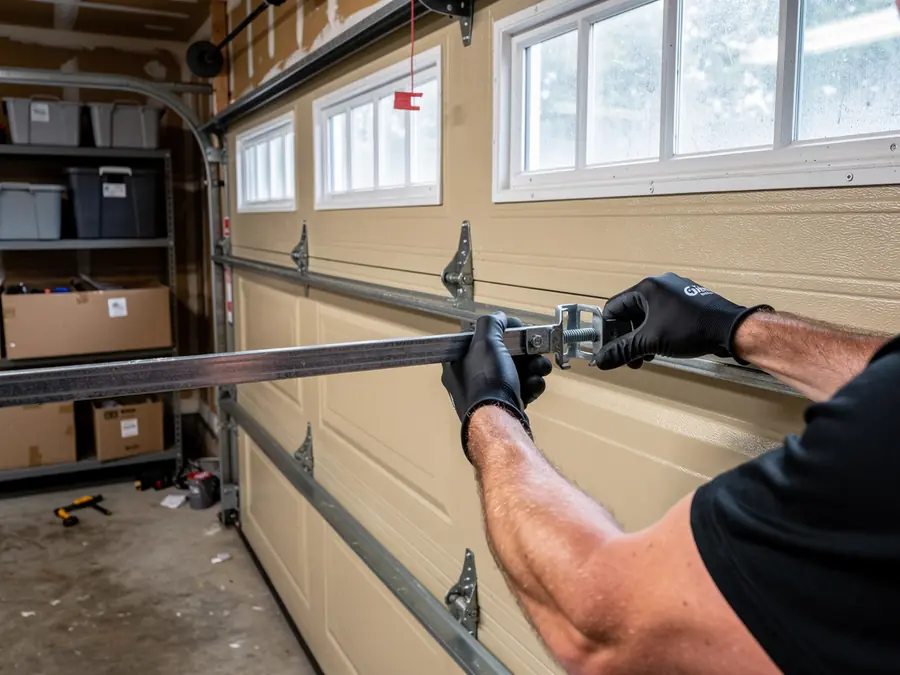
Where it stops being a DIY job is anything involving the logic board, the gear and sprocket assembly, or the safety sensors. The board is wired into line voltage and a failed repair there can fry the whole unit or, worse, disable the auto-reverse safety feature without you knowing it.
Sensor alignment looks simple but a door that doesn't reverse properly on an obstruction is a real hazard, not a minor inconvenience, especially in a household with kids or pets using the garage.
If the opener is the original 1989 unit and the gear has stripped, you're also choosing between hunting down parts for a thirty-five-year-old motor or just replacing it - and honestly, at that age, replacement is usually the better call financially. We'll look at what's actually failed before recommending either one, five miles out from Brandon.
Questions
If it's the unit that came with the house in 1989, probably close. Motors and gear assemblies from that era can sometimes be repaired once, but parts for discontinued housings run out eventually. We check the model and housing condition first and tell you honestly whether a repair or a replacement makes more financial sense.
Usually a misaligned safety sensor, a failing logic board, or a drive gear that's started to slip. All three are common on openers that have run fifteen-plus years in Florida's humidity. We diagnose which one it is before replacing anything, since the fix and the part are different for each.
We stock common gear kits, belts, boards, and sensors on the truck for most opener brands still in production. For discontinued models from the late 1980s, availability depends on the housing - some we can still source parts for, others are better replaced outright.
No. We run out of Brandon, about 5 miles away, and bring the parts and tools with us on every call.
Explore more
Ready when you are
Brandon Garage Door Pros repairs and installs garage doors, springs and openers in Brandon, FL and the surrounding area.